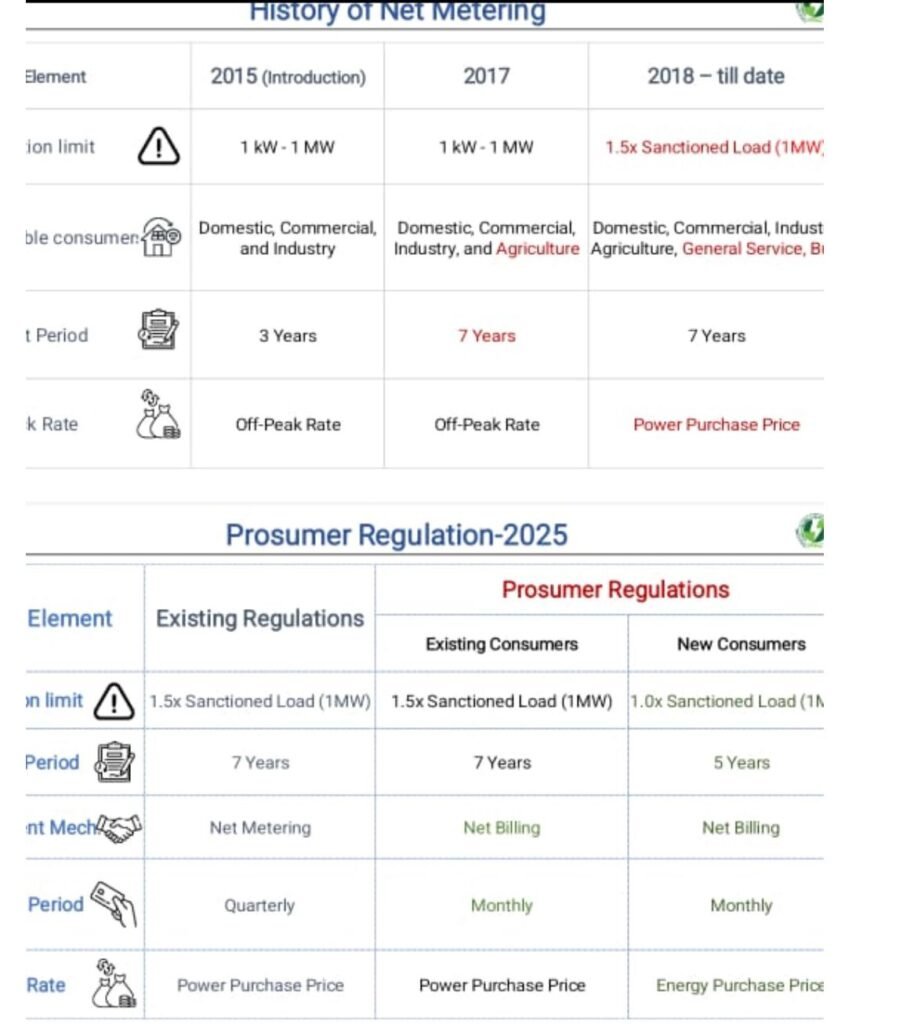
Here is what happened in short: the government decided to abolish net metering for both existing and future solar consumers. New regulations were issued by Nepra on Tuesday, and it was clear that the system of billing had changed for anyone who was on net-metering.
There are 4.66 lakh net metering connections in the country, and most of them are installed in urban areas. In response to the regulation there has been an uproar, and merely a day after Nepra made its announcement the federal government seems to be backtracking on the status of those households that have existing net-metering connections.
The Prime Minister has already directed the power division to file an appeal with Nepra and the Power Minister, Awais Leghari, has assured the senate there will be no change in the status of existing net-metering consumers (despite what the regulation clearly states). The question remains: What will happen now?
The difference between net-metering and net-billing
Under net-metering, if you have solar panels on your house, two things happen. During the daytime your panels produce a certain number of units of electricity. That electricity is free because you are using it yourself. However, if you produce extra electricity (in case you have a larger installation than you need or your usage during the day is low because you’re at work) your meter records how much excess electricity you produced. Your DISCO then subtracts the units you sent from the units you used. So if you used 200 units from the grid but sent 200 units back, your bill could become zero. It was like swapping electricity unit for unit. And if you produced even more than you used, your bill could go in the negatives as well.
In simple terms, the units you export can cancel out the units you import at the full price, which helps reduce your bill more quickly. If you install excess capacity and generate more units, they will be credited back to you in your bill and can also offset on-peak consumption that takes place when the sun sets and solar production ends for the day. For all intents and purposes it means net metering users were treating the grid like a battery.
Under the new system called net billing, things work differently. You still use your own solar power first. But now, if you send extra electricity to the grid, you do not get unit-for-unit credit. Instead, you sell that electricity to the grid at a fixed buyback rate. When you take electricity from the grid at night or when solar is not producing, you must pay the full retail price. So you are buying at a high rate and selling at a lower rate. For all intents and purposes, the government wants people to produce as much electricity as they need and are uninterested in buying the excess from them.
The surplus generation exported to the Discos will be calculated separately, at Rs 26 per unit for existing and around Rs10 per unit for future prosumers, which is one way in which existing consumers are protected. The net difference will be billed to consumers, unlike the existing system of unit-for-unit exchange in import and export.
How it affects existing prosumers
The decision has naturally been a cause for concern for those households that have already installed rooftop solar and are on net-metering connections. Initial reports in the media were mixed over the status of existing net-metering users.
Since those people with existing net-metering connections had signed seven year (in some cases five and three) year contracts with their respective power distributing companies like LESCO, PESCO etc, many felt they could not be shifted to net billing because it would go against the contract. However, while the Nepra regulations are dense, they are also very clear.
In section 21 of the regulations, Nepra categorically states that the 2015 regulations under which existing prosumers had signed contracts stand repealed. While this does not render the agreements void, the existing consumers will now be billed according to the new regulations.

This has naturally caused an uproar among existing consumers. They feel cheated out of their contracts. While the 2015 contracts explicitly stated that distribution companies cannot change the terms of these agreements, there was a provision that the terms of their contracts could be changed if Nepra intervened — which is what has happened in this case.
As things stand, all existing net metering connections have been shifted to the new net-billing system. There is still a protection for existing consumers in the new regulations. In section 21, the new regulations make it clear that existing consumers will be charged for electricity at the national average power purchase price until the terms of their contracts are up, which is currently around Rs 26 per unit. After the terms of their contract is up it will be charged at the national average energy power price.
Is the government backtracking?
There are currently 4.66 lakh net meter prosumers in the country. Most of these are centered in urban areas and have installed large solar systems to offset their consumption. Many have achieved zero as well as negative bills through net metering. With the introduction of net billing, the party will have to come to an end.
However, it is worth mentioning that the section of the population that has reaped the benefits of net metering are wealthy and influential as a group. Their complaints are loud and the government is clearly affected by them. The very next day after Nepra’s new regulations, Minister for Power, Awais Leghari, claimed on the floor of the senate that existing users would not be affected — despite what the regulations clearly state.
A little while after this, Prime Minister Shehbaz Sharif has instructed the power division to immediately file an appeal with Nepra to review the new solar regulations in an effort to protect existing contracts for current solar users. As things stand, the net metering of all consumers including old ones has been revoked. It has been replaced by net-billing. But the tone from the PM’s office indicates that these 4.66 lakh households will get what they want.
The post How will existing solar net metering users be affected by NEPRA’s new regulations? appeared first on Profit by Pakistan Today.